Therapeutic Atmospheres (THERASPHERES)
Mental health challenges represent one of the most pressing issues of 21st-century science, with an estimated 9% of the population currently experiencing a mental disorder and 25% expected to face one at some point in their lives. As these challenges become increasingly prevalent, the importance of understanding what contributes to effective healing cannot be overstated. While existing research recognizes that the environment in which therapy occurs—such as the layout, lighting, sound, and furniture of a room—can significantly influence therapeutic outcomes, there remains a notable gap in the literature regarding how these therapeutic spaces affect individuals and shape the course of psychotherapy.
The project "Therapeutic Atmospheres" (THERASPHERES) seeks to address this gap by exploring how patients and therapists experience affective atmospheres in therapy and how these experiences impact the course and effectiveness of therapy, The primary objectives of this project are threefold: (1) to map the various interpretations of 'atmosphere' within the literature on phenomenological psychiatry and situated affectivity, (2) to assess how the experience of atmospheres in consultation rooms influences therapeutic change processes, and (3) to refine existing conceptualizations of 'atmosphere' within the field of phenomenological psychiatry and situated affectivity and explore their application to other research domains.
By employing a novel method that integrates front-loading phenomenological methods with Cognitive Event Analysis on video recordings, THERASPHERES will systematically assess the influence of affective atmospheres in therapeutic processes. Ultimately, this project aims to enhance our understanding of how to create spaces that foster better mental health outcomes.


Towards a process perspective of mental conditions
This project aims to develop the processual and relational ontology underpinning the enactive psychiatry and to explore its implications for debates on the nature of mental conditions. As an alternative to the reifying tendency of current classificatory systems, we suggest that mental conditions should be viewed as dynamic developmental processes that emerge throughout a person's life and are closely tied to their process of individuation.
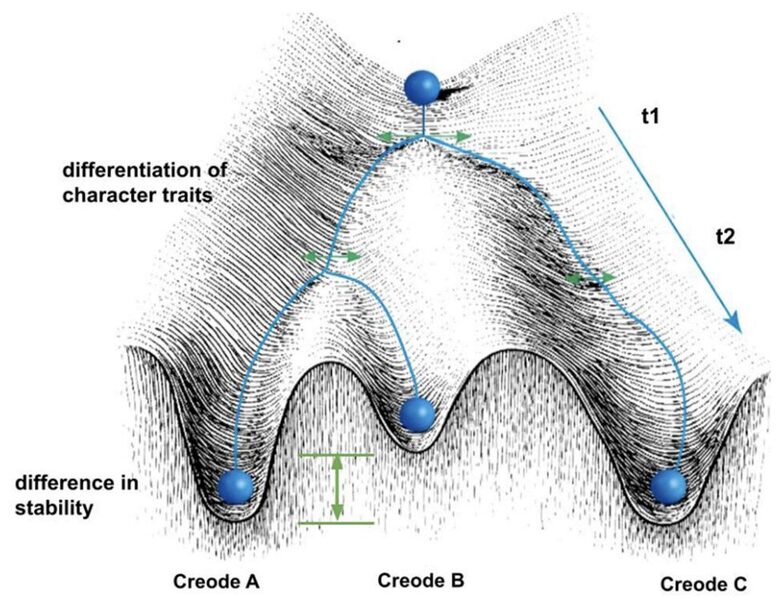
For doing so, we combine network theory with Waddington´s epigenetic landscape to model the developmental constraints (e.g., character traits) that shape the vulnerability and course of mental conditions. In doing so, we engage with longstanding discussions in the philosophy of science concerning natural kinds, scientific classification, and scientific explanation.
Overall, the project presents mental conditions as individualized, evolving, and path-dependent conditions rather than fixed pathologies. We conceptualize mental health through a vulnerability framework rather than a pathology framework, emphasizing personal development, context, and change, with implications for diagnosis, treatment, and ethics.Funded by the Basque Government and the University of the Basque Country.
Participatory sense-making in psychotherapy
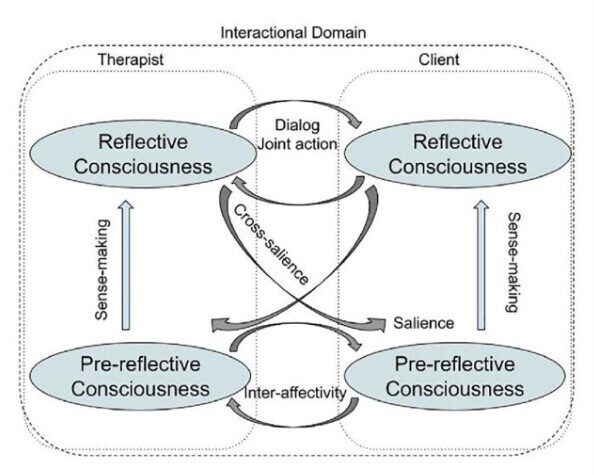
I defended my PhD thesis, “ Participatory sense-making in psychotherapy,” at the University of the Basque Country in 2022 (International Mention and Extraordinary Award). The project was carried under the supervision of Ezequiel Di Paolo and Hanne De Jaegher and founded by the Basque Government (PREDOC 2018-2019). In the thesis, I studied embodied intersubjectivity in therapeutic relationships. I adopt a second-person perspective by placing participatory sense-making processes at the center of my investigation. I present three pieces of work applying the enactive framework to research in psychotherapy: (1) a comment on correlational studies on non-verbal coordination and psychotherapeutic outcome, where new working hypothesis and interpretation of empirical data were suggested; (2) an interpretative phenomenological-analysis of the pre-reflective intercorporeal mechanisms involved in the transition from face-to-face to online therapeutic settings, and (3) a phenomenological-enactive analysis and classification of therapeutic interventions on the body. The thesis contributes to our understanding of the complexity of interactions and modes of participation of the therapist-patient dyad.
Funded by the Basque Government.